
Walk through any pet store and you'll see the word "natural" plastered on packaging everywhere. But very few brands tell you how their treats are made — because the process matters just as much as the ingredients.
Most commercial dog treats go through an oven. And that's where the nutrition story starts to fall apart.
What Happens When You Bake a Dog Treat
Heat is brutal on nutrition. When ingredients are cooked at high temperatures — typically 300°F to 400°F for baked treats — several things happen simultaneously:
Enzymes are destroyed. Food naturally contains enzymes that aid digestion. Heat denatures enzymes at temperatures above 118°F. By the time a baked treat comes out of the oven, those enzymes are gone.
Heat-sensitive vitamins degrade. Vitamins B1 (thiamine), B5, B6, C, and folate are all heat-sensitive. Studies on human food processing consistently show significant losses of these vitamins during high-temperature cooking. The same physics apply to pet food.
Proteins can be damaged. The Maillard reaction — the same browning process that makes a baked treat look appealing — can alter protein structures and reduce bioavailability. That means your dog absorbs less of the protein you're paying for.
Moisture drives texture, not nutrition. Baking drives out moisture to create shelf stability and a certain texture. But manufacturers often add back artificial preservatives, binders, and flavor enhancers to compensate for what the heat process stripped away.
The Freeze-Drying Process: What Actually Happens
Freeze-drying — technically called lyophilization — takes an entirely different approach. Instead of using heat to remove moisture, it uses a combination of freezing and vacuum pressure.
Here's the process in simple terms:
- The ingredient is frozen solid — locking its cellular structure in place, exactly as nature made it.
- The frozen material is placed in a vacuum chamber. Pressure is reduced dramatically.
- At low pressure, ice converts directly to water vapor — a process called sublimation — without ever passing through liquid form.
- The result: a lightweight, shelf-stable product with its original nutritional profile almost entirely intact.
The critical difference is temperature. Freeze-drying operates at temperatures well below 32°F throughout most of the process. Enzymes survive. Heat-sensitive vitamins survive. Proteins retain their natural structure and bioavailability.
Why This Matters for Your Dog
If you're buying a treat specifically because it's made from bison liver or chicken hearts — because those ingredients are nutrient-dense, protein-rich, and naturally high in vitamins — then the process used to make that treat determines whether any of that nutrition actually survives.
A baked bison liver treat is bison liver that's been through a 375°F oven. What's left is the flavor profile and some of the macronutrients — but a meaningful portion of the micronutritional value has been compromised.
A freeze-dried bison liver treat is bison liver with its nutritional profile preserved as close to raw as commercially possible — without the handling risks that come with raw feeding.
The Trade-Off: Texture and Cost
Freeze-drying is more expensive than baking. The equipment is industrial-grade, the process is slower, and the yield per batch is lower. This is why freeze-dried treats cost more.
The texture is also different — light, slightly airy, and intensely concentrated in flavor. Many dogs actually prefer it precisely because the natural scent and taste aren't cooked out.
If you're looking at a premium treat and comparing a baked product to a freeze-dried one, you're not comparing equivalent things. You're comparing a convenient snack to a nutritionally preserved whole food.
What This Means for K9 Krunch
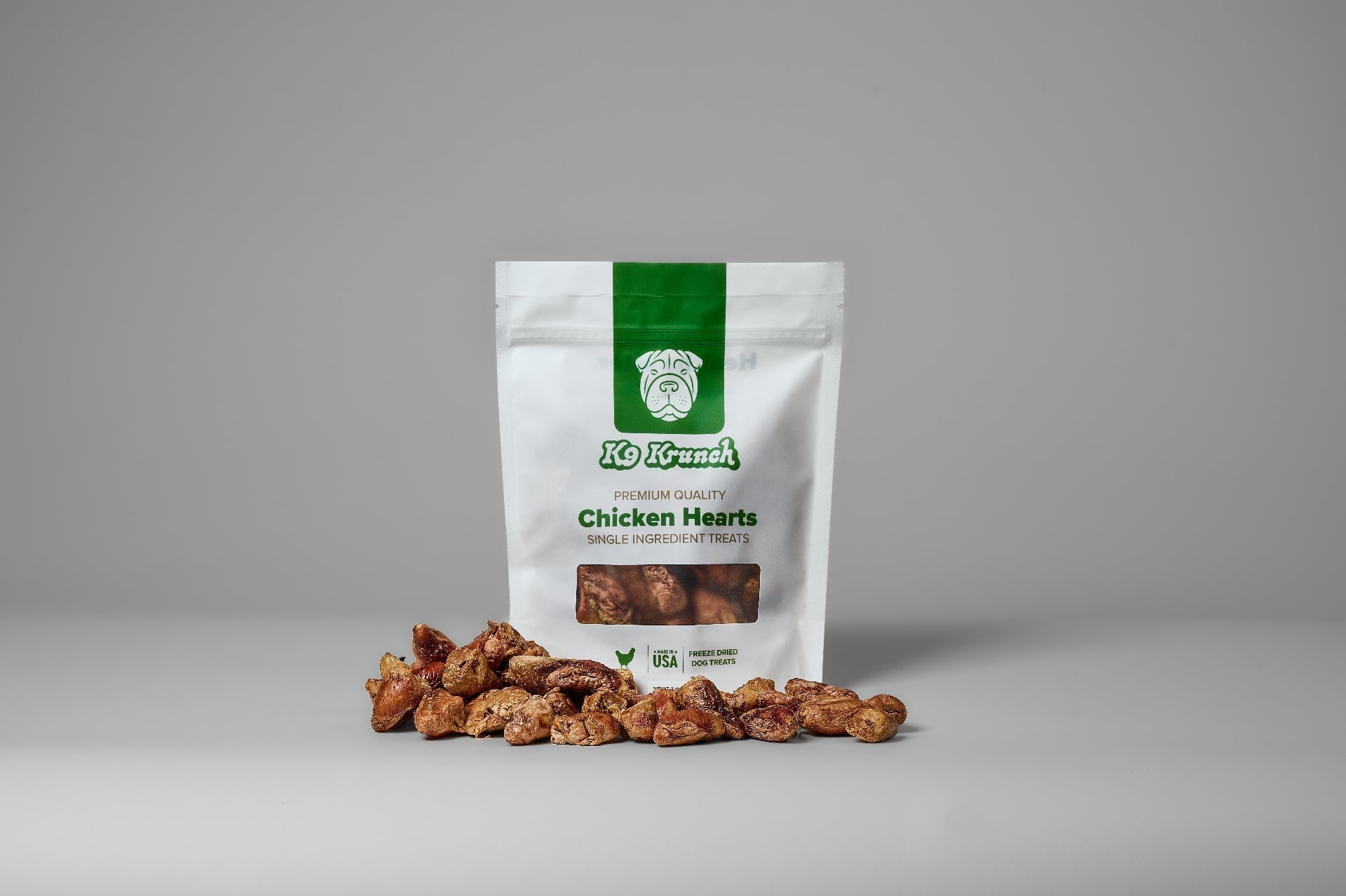
Every K9 Krunch treat starts with a single USDA-sourced ingredient — nothing else. No fillers, no binding agents, no flavor additives. The freeze-drying process means the ingredient you see on the label is what your dog actually gets, with its natural nutritional integrity intact.
When the ingredient list has one item, and the process preserves that ingredient instead of cooking it down, you get something genuinely different from what's sitting in most pet store treat aisles.
Your dog's body knows the difference. So does their energy, coat, and digestion — over time.
K9 Krunch treats contain one ingredient. That's it. Read the label.
Why Single-Ingredient Treats Are the Best Choice for Your Dog
How to Train Your Dog Using High-Value Treats